How Does a Ceramic Vacuum Filter Work in Mineral Processing?
In modern mineral processing and metallurgical operations, solid-liquid separation is a critical phase that directly dictates plant profitability, environmental compliance, and water conservation. Among various mechanical dewatering technologies, the ceramic vacuum filter has emerged as the gold standard for high-efficiency processing plants dealing with copper, iron, gold, and zinc concentrates, as well as complex tailings management.
If you are exploring advanced ceramic vacuum filtration process for mineral slurry, understanding the underlying mechanical principles and operational workflows is essential for maximizing uptime and minimizing energy expenditures.
The Core Mechanism: Capillary Action Meets Vacuum Technology
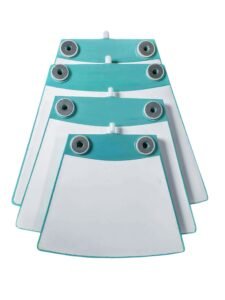
Unlike traditional rotary drum filters or belt filter presses that rely on fabric filter cloths prone to rapid blinding and high air leakage, a modern ceramic vacuum filter utilizes advanced microporous ceramic sector plates. These plates feature a strictly controlled pore size (typically ranging from 0.75 to 3.0 microns) and a high total porosity (38%–45%).
When the ceramic elements are submerged in mineral slurry, the combination of negative pressure (vacuum) and the hydrophilic nature of the high-purity alumina matrix triggers a powerful capillary action. Water molecules pass rapidly through the multi-connected internal water channels, while air penetration is completely blocked. This results in crystal-clear filtrate and ultra-low filter cake moisture.
The 4-Stage Continuous Dewatering Cycle
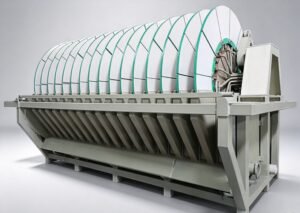
The operation of a ceramic disc filtration system is fully automated and runs in a continuous 4-stage cycle:
- Stage 1: Cake Formation (Subimmersion)
As the microporous plates rotate and submerge into the slurry bath, the vacuum pump pulls the liquid through the ceramic matrix into internal filtrate pipes. A uniform filter cake rapidly accumulates on the outer surface of the sectors. - Stage 2: Cake Dewatering (Air-Free Drying)
Rotating above the slurry level, the continuous capillary action within the ceramic structure extracts residual moisture from the filter cake without breaking the vacuum seal, ensuring minimum final moisture and massive energy savings. - Stage 3: Cake Discharge (Precision Scraping)
High-purity alumina ceramic scraper knives cleanly shave off the dried cake. A regulated 0.5–1.0 mm micro-gap is maintained to preserve a thin protective layer of solids, shielding the plate surface from abrasive wear. - Stage 4: Element Back-Flushing & Regeneration
Clean plant water is back-washed from the inside out (at operational pressures of 0.2–0.6 MPa) to dislodge any trapped micro-particles, automatically regenerating pore permeability and maintaining peak filtration rates.
“By eliminating fabric cloths and utilizing a seamless water-cast ceramic structure, plants can achieve up to 90% energy savings on vacuum blower systems while ensuring continuous 24/7 dewatering performance.”
Performance Benchmarks Across Mineral Slurries
Different mineral slurries present unique dewatering challenges due to varying particle size distributions and mineral densities. Below is an overview of typical performance benchmarks achieved by advanced microporous ceramic filtration systems:
| Mineral Species | Particle Size (-200 Mesh) | Feed Concentration (%) | Throughput (kg/m²·h) | Filter Cake Moisture (%) |
|---|---|---|---|---|
| Iron-Ore Concentrate | 50%–60% (-400 mesh) | 55%–60% | 850–1500 | 6%–9% |
| Copper Concentrate | 74% | 50%–60% | 600–900 | 10%–14% |
| Gold Concentrate | 50% | 45%–60% | 600–1000 | 10%–14% |
| Zinc Concentrate | 90% | 50%–63% | 700–900 | 6.5%–11% |
Why Water-Cast Ceramic Filter Plates Matter
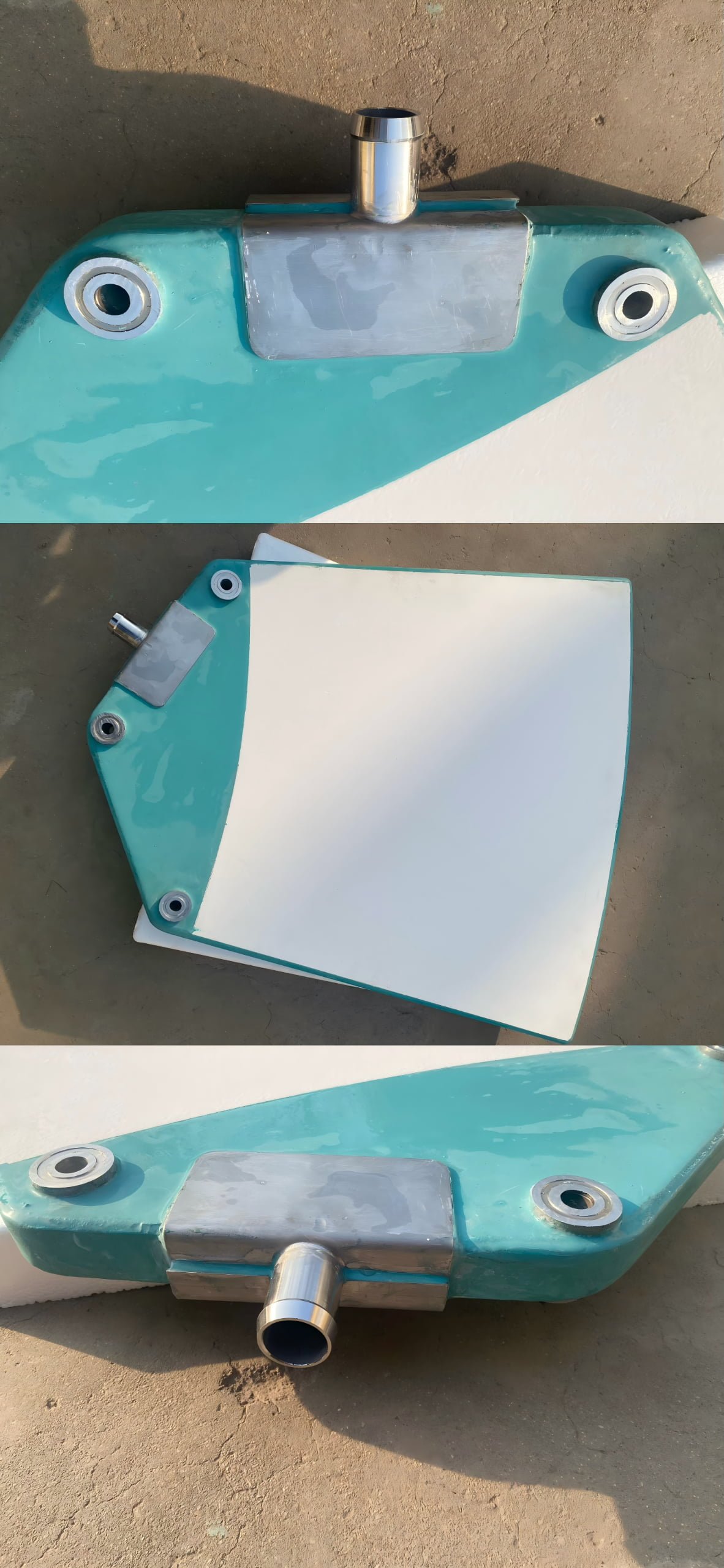
The overall stability of a ceramic disc filter relies heavily on the quality of its individual sector plates. Traditional mosaic-glued or machine-pressed sectors frequently suffer from delamination and cracking under high negative pressure. In contrast, premium components utilizing an advanced water casting process feature a one-piece integral molding and multi-connected internal water structure. For heavy-duty industrial requirements, upgrading to 12㎡/Disc Heavy-Duty Plates ensures an extended operational lifespan of 13–15+ months, drastically cutting unscheduled maintenance downtime.
Ready to Upgrade Your Mineral Processing Circuit?
Stop losing energy and production time to frequent media failures. Contact our engineering team today to discuss your filtration requirements, or explore our heavy-duty component specifications.
Request Technical Consultation & Quote